http://websearch.about.com/od/governmentpubliclegal/tp/publicrecords.htm
http://websearch.about.com/od/governmentpubliclegal/ht/obituaries.htm
Sunday, April 29, 2012

Sunday, April 8, 2012
Mike Wallace CBS News broadcaster is Dead at 93


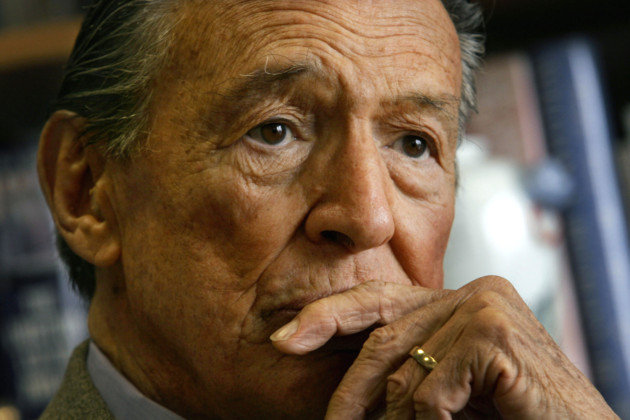

Mike Wallace, the grand inquisitor of CBS's "60 Minutes" news show who once declared there was "no such thing as an indiscreet question," has died at the age of 93, the network said on Sunday.
Mike Wallace, the legendary CBS News broadcaster, interviewer and "60 Minutes" icon, has died, the network said Sunday.
Wallace, whose "probing, brazen style made his name synonymous with the tough interview -- a style he practically invented for television more than half a century ago" died "peacefully" on Saturday night, surrounded by family in New Canaan, Conn., CBS said.
LOS ANGELES - Via statements and comments on Twitter, colleagues and friends reacted Sunday to the news that longtime CBS correspondent Mike Wallace, the "60 Minutes" interviewer, died Saturday at age 93:
http://news.yahoo.com/blogs/cutline/mike-wallace-dead-60-minutes-legend-93-153527720.html
http://www.reuters.com/article/2012/04/08/us-usa-wallace-idUSBRE83708Y20120408
http://www.nytimes.com/2012/04/09/business/media/mike-wallace-cbs-pioneer-of-60-minutes-dead-at-93.html?pagewanted=all
Saturday, March 17, 2012
John Demjanjuk Dead

30 Millions dead during WW II is blamed on only one man a guard.
Germany picks on this lonely guard. Shame.
Wednesday, November 16, 2011
CBS 60-Minutes Program Funny Man Andy Rooney Dead at 92

Rooney, whose job was to be publicly himself for a few minutes every Sunday evening, was inescapably different things to different people, and even from essay to essay: On the one hand, a teller of truths, old enough to remember a world that made a little more sense, or wise enough to imagine the world in which we finally might get it right; on the other, a mean old man yelling at some damn kids to get off his lawn. (Cameron Crowe's recent documentary "Pearl Jam Twenty," about the Seattle rock band, replays at length Rooney's less than gracious remarks on the 1994 suicide of Kurt Cobain, and the generation that idolized him.)
PHOTOS: Andy Rooney| 1919 - 2011
Indeed, Rooney was nearly (or almost nearly) a senior citizen when he began his long last act on "60 Minutes" -- 33 years encompassing 1,079 editions of his secular sermonette, "A Few Minutes with Andy Rooney." He had already lived a professional lifetime by then, beginning as a correspondent for Stars and Stripes during World War II and entering into television in its infancy, where he would write for both entertainer Arthur Godfrey and newsman Harry Reasoner. These comic and journalistic voices he would later combine in his own work, beginning in the 1960s with the video essays he wrote for Reasoner and then, in the '70s, the self-hosted prime-time specials, including "Mr. Rooney Goes to Washington" and "Mr. Rooney Goes to Work," that first established him as an on-air personality.
There are a lot of people talking on television today, in the precincts where Rooney worked, and many of them are talking without much reflection, wit or attention to the words they use. They deal only in volume: They speak loud and they speak long. As a TV personality, Rooney was always foremost a writer -- there, in his cluttered office-as-set was his typewriter for the world to see -- and even with the multiple digressions that were a hallmark of his style, he did not belabor a point. And he made his points quietly. His language was deceptively elegant, colloquial but precise.
Like his fellow video essayist, the late Charles Kuralt -- another longtime employee of CBS, for what that's worth -- Rooney paid exacting attention to the small and overlooked things of the world: The first of the video specials he wrote for Reasoner was titled "An Essay on Doors." Although he was reflexively called a curmudgeon -- not least because, with his beetling white brows, he looked the way we imagine a curmudgeon would -- he also spoke often of things he loved: elastic bands, dogs, New York weather. Even his complaints more often than not betrayed a general delight with the strangeness of the world, not a desire to be shut of it.
He was, of course, a performer; the person you saw leaning confidentially toward you on television was a Rooney edited and organized -- by Rooney -- for comic effect. (When he was simply serious, by contrast, as when commenting on the Oklahoma City bombing, the Challenger disaster or the death of Osama bin Laden, he was simply himself.) But it was a performance informed by real ideas wrought from years' experience.
That experience now includes the last experience of all: "I hate it. I mean, I'm gonna die," Rooney told Morley Safer, when asked how he liked old age in an interview that accompanied his final "60 Minutes" broadcast, "and that doesn't appeal to me at all." He would have gotten a good piece out of his own passing; it's a shame we won't get to see it.
Thursday, October 27, 2011


Monday, October 10, 2011
Dr. Richard Koch dies at 89; medical pioneer


After the World War II bombardier became a doctor, he changed the way the developmentally disabled were treated and made huge strides in fighting PKU, a disorder that can cause mental disability.
In 1951, Koch — pronounced "coke" — earned a medical degree from the University of Rochester in New York, joined Children's Hospital Los Angeles and embarked on a groundbreaking career in developmental disabilities.
As a researcher, Koch devoted much of his career to preventing disability, specifically phenylketonuria, commonly called PKU, a hereditary metabolic disorder that can cause mental disability.
Early discovery allows for prevention, since the faulty gene that causes PKU enables the amino acid phenylalanine — contained in many foods — to build up in the blood and cause brain damage. PKU babies were placed on a tasteless no-protein diet and kept on it until they were about 10 years old, when their brains were sufficiently formed.
With Koch coordinating the effort, Children's Hospital served as the hub of a national drive to collect data on adult PKU patients and encourage those who were pregnant to return to the no-protein diet to increase their chances of having a healthy baby.
A memorial will be held at 4:30 p.m. Saturday at All Saints Church, 132 N. Euclid Ave., Pasadena.
LOS ANGELES – As a prisoner of war in Germany during World War II, Richard Koch chose his life’s work after reading one of the few books in the camp’s meager library – the medical biography “The Doctors Mayo.”
Liberated in 1945 after 13 months in captivity, he sped through his undergraduate years at the University of California, Berkeley, by persuading the school to give him course credit for his bombardier training in the Army Air Forces.
In 1951, Koch – pronounced “coke” – earned a medical degree from the University of Rochester in New York, joined Children’s Hospital Los Angeles and embarked on a groundbreaking career in developmental disabilities.
He pioneered mobile clinics that brought medical services to the disabled and led a landmark effort to screen newborns for a type of mental disability that can be treated with a no-protein diet, effectively putting an end to the disorder.
Koch, who had a heart condition, died Sept. 24 at his Los Angeles home, said his wife, Jean. He was 89.
He was an early advocate against institutionalizing the developmentally disabled, which was commonplace in 1955 when Koch was named director of the hospital’s newly established clinic for the study of mental disabilities.
The traveling clinics he created evolved into dedicated regional centers that enabled children to remain home with their families or live in a non-institutional setting.
“There was such a need, such a hunger. You can never forget that,” Koch said in the 2006 book “Over Here: How the G.I. Bill Transformed the American Dream.”
After California Gov. Pat Brown signed legislation in 1966 to create a regional-center system in California, Koch served as the founding director of a Children’s Hospital pilot facility now known as Frank D. Lanterman Regional Center. More than 20 eventually were established around the state.
As a researcher, Koch devoted much of his career to preventing disability, specifically phenylketonuria, commonly called PKU, a hereditary metabolic disorder that can cause mental disability.
He successfully lobbied for the first mandatory screening programs in the country, urging California and other state legislatures to require mandatory screening for PKU in newborns with a simple blood test.
Early discovery allows for prevention, since the faulty gene that causes PKU enables the amino acid phenylalanine – contained in many foods – to build up in the blood and cause brain damage. PKU babies were placed on a tasteless no-protein diet and kept on it until they were about 10 years old, when their brains were sufficiently formed.
By the late 1960s, the disease was largely under control. But around 1980, health officials noticed that female PKU patients saved from disability were giving birth to babies with mental disabilities and other disorders. PKU mothers who followed a regular diet were developing high blood levels of phenylalanine that damaged the fetus.
“Logically, we should have thought of it,” Koch told the Los Angeles Times in 1996. “But I think we were so enthused about these first PKU patients even being normal. That in itself was a shock.”
Unable to bear the thought that “a small army of patients that had been saved from this condition was producing a new flock of disabled children,” Koch secured a grant to deal with the problem, according to the book “Over Here.”
With Koch coordinating the effort, Children’s Hospital served as the hub of a national drive to collect data on adult PKU patients and encourage those who were pregnant to return to the no-protein diet to increase their chances of having a healthy baby.
Almost until the end of his life, Koch continued to treat PKU patients whom he first saw as infants decades ago, seeing them at his home near the hospital he retired from about five years ago.
“He was the most unassuming, gracious, gentle, kind-hearted man,” said Dr. Linda Randolph, head of medical genetics at Children’s Hospital. “You would never know how great he was and what a tremendous contribution he made in the fields of disabilities and PKU from a casual conversation. He never tried to impress anybody.”
He was born Nov. 24, 1921, in Dickinson, N.D., the sixth of nine children of Valentine Koch, a sheep farmer, and his wife, Barbara. His family moved to Petaluma when Richard was 7, and his father worked on a poultry farm.
At a USO dance, Koch met his future wife, who was playing marimba in the band. He headed off to war soon after they married in 1943.
In April 1944, Koch and his fellow Army Air Forces crew members were shot down while flying over Germany in a B-24 Liberator. He immediately was captured. While in the POW camp, he bartered for a typewriter and began a POW newspaper.
Once he was home, he bought an Army surplus Jeep for $150 that came in a crate, assembled it and drove it cross-country to medical school.
With his family, he often backpacked, once hiking 110 miles round-trip from Mineral King in Sequoia National Park to Mount Whitney and trekking 150 miles on the John Muir Trail.
He took a leave of absence in 1970 to spend a year in Peru with his family as a medical volunteer with Project Hope. Koch also taught medicine at the University of Southern California.
Well into his 70s, the dedicated environmentalist could be spotted riding his bicycle down Sunset Boulevard to work, his tie flapping in the wind.
In addition to his wife, Koch is survived by three daughters, Jill, Christine and Leslie, all of Los Angeles; two sons, Tom and Martin, both of Ridgecrest, Calif.; 10 grandchildren; and nine great-grandchildren.
1921-2011
Richard Koch was born in Dickinson, North Dakota in 1921, the 6th child in a family that eventually included seven boys and two girls. The family moved to Petaluma, California when he was a child and he attended elementary and high school there, graduating in 1941 and earning a scholarship at the University of California at Berkeley. In 1942 he enlisted in the Army Air Corps and was trained as a bombardier. He served in the 8th Air Force, based in England until his B-24 was shot down on April 9, 1944. He spent 13 months as a prisoner of war at Stalag Luft 1 in Germany. After the war, he finished his pre-medical studies and was accepted at the University of Rochester School of Medicine in New York, graduating in 1951. He interned at Childrens Hospital of Los Angeles where he eventually joined the staff and became a Professor of Pediatrics at the Keck School of Medicine at the University of Southern California. In 1957 he started a traveling clinic that brought a team of professionals to 13 southern California counties to serve children with developmental disabilities. In 1966 Governor Pat Brown signed legislation that used this model in establishing the Regional Center system in California. Eventually 21 Regional Centers were established throughout the state. Richard Koch became the first director of the Frank Lanterman Regional Center. In 1970 he took a sabbatical leave and he and his family spent a year in Peru where he was a volunteer for Project Hope. Over a span of more than 50 years, Richard Koch conducted extensive research on Down syndrome and rare metabolic disorders, such as PKU (Phenylketonuria). He was the principal investigator in the Collaborative Study of Treatment of Children with Phenylketonuria sponsored by the National Institutes of Health, which lasted 16 years. He was also the principal investigator of the International Maternal Phenylketonuria Collaborative Study. In 1962 he was actively involved in getting legislation passed in California mandating newborn screening for all babies born in this state. Since 1966 when the legislation passed, hundreds of babies have been diagnosed at birth and treated for severe genetic disorders. Dr. Koch was also involved in research to establish guidelines for getting FDA approval for biopterin for the treatment of PKU in the U.S. This product is now available under the trade name Kuvan and is the newest treatment for many people with PKU. He also pioneered in the treatment of persons with PKU who are disabled because they were born before newborn screening. In 2004, a new group home specifically for late-treated persons with PKU was named in his honor – The Koch-Vagthol's Metabolic Residential Care Center in Burbank, California. Dr. Koch has had more than 200 articles published in peer-reviewed professional journals. He married Jean Holt in 1943 and they raised five children. The family spent many summer vacations back-packing in the Sierra, including a 110 mile round trip hike from Mineral King to Mt. Whitney and a 150 mile hike on the John Muir Trail. He and Jean were active in efforts to save Mineral King from commercialization in the 1970s. This battle was won and Mineral King is now part of Sequoia National Park. Richard Koch is survived by his wife, Jean, his daughters, Jill Koch Tovey, Christine Koch Wakeem and Leslie Koch and by his sons, Tom and Martin. He also leaves ten grandchildren and nine great-grandchildren. He passed away peacefully in his home on September 24, 2011. He lived a full, adventurous life and accomplished much. A memorial service and reception will be held at All Saints Church, 132 N. Euclid Avenue, Pasadena, CA 91101 on Saturday, Oct. 8 at 4:30 P.M. Donations in his memory can be made to Mt. Hollywood Congregational Church, 4607 Prospect Ave., Los Angeles, CA 90027 or to the Guthrie-Koch Scholarship Fund at 6869 Woodlawn Ave. NE # 116, Seattle, WA 98115-5469.

http://www.legacy.com/obituaries/latimes/obituary.aspx?n=richard-koch&pid=153877613
http://www.pkuheroes.org/drkoch/
http://www.npkua.org/
Thursday, October 6, 2011
Subscribe to:
Posts (Atom)