Thursday, March 24, 2022

Madeleine Albright Former Secretary of State Dead At 84


Madeleine Albright, First Woman To Serve As U.S. Secretary Of State, Dead At 84


Albright's family announced her death on social media on Wednesday, March 23. "We are heartbroken to announced that Dr. Madeleine K. Albright, the 64th U.S. Secretary of State and the first woman to hold that position, passed away earlier today," their message read. "The cause was cancer. She was surrounded by family and friends. We have lost a loving mother, grandmother, sister, aunt, and friend."

A Prague native who came to the U.S. as a refugee in 1948, Albright served as the Secretary of State from 1997 to 2001 under President Bill Clinton. In 2012, she received the Presidential Medal of Freedom.


Friday, March 18, 2022

Alaska Republican Congressman Don Young dead at 88


Longest-serving U.S. congressman, Alaska's Don Young, dies


Alaska Congressman Don Young, the most senior member of the U.S. House, has died. He was 88.

Lobbyist Jack Ferguson, who was Young’s friend and his first chief of staff, confirmed the news Friday afternoon.

He said he heard from Alaska Airlines that the congressman died in Concourse B. And he was so stunned he didn’t ask which airport.

HOUSE IN MOURNING 

Don Young dead at 88 – Alaska rep and longest-serving Republican member of Congress who was elected in 1973 passes away


“An absolutely heartbreaking loss for Congress, Alaska, and the United States of America. As Dean, Don Young was an institution in the House of Representatives, beloved and revered by Members of Congress on both sides of the aisle. Almost every Member of Congress has a one-of-a-kind story of their first interaction with Don Young. He was a tireless and exceptional advocate for the people of Alaska. He spent every single day doing what he loved - bringing his gargantuan voice and outsized leadership on behalf of Alaskans. He was a friend to so many. I was proud to call him a friend and colleague. Don Young’s sudden passing leaves a hole in our hearts and he is simply irreplaceable in the People’s House. Our deepest prayers and condolences go to his beloved family, friends, dedicated staff, and constituents," the statement read.

Original:

Stunning news broke on Friday night, as former staffers for Rep. Don Young (R-AK) confirmed that Young, who was the longest-serving member of Congress, died. According to the Anchorage Daily News, which cited Jack Ferguson, Young's former chief of staff, the congressman lost consciousness on a flight from Los Angeles to Seattle and could not be resuscitated. He was 88-years old and had also served as the dean of the U.S. House of Representative.


Sunday, March 7, 2021

Nedzib Sacirbey, a ‘founding father’ of independent Bosnia, dies at 94 of the coronavirus


Nedzib Sacirbey was considered one of the “founding fathers” of the Balkan state of Bosnia, which declared its independence in 1992 after the breakup of communist Yugoslavia but thereafter endured an ethnic war among its Bosniak (mainly Muslim), Serb (mainly Orthodox Christian) and Croat (mainly Roman Catholic) populations.

After acts of genocide committed by Bosnian Serbian military forces, including the Srebrenica massacre of more than 8,000 Bosnian men and boys in July 1995, a massive air and ground campaign by NATO forces in August and September of that year finally silenced the guns.

The war formally ended through the U.S.-brokered Dayton peace accords reached at Wright-Patterson Air Force Base in Ohio in November 1995, led by U.S. Secretary of State Warren Christopher and his assistant and chief negotiator, Richard Holbrooke.

Dr. Sacirbey, a psychiatrist by calling, was present at the peace conference as a confidant, adviser and right-hand-man to Bosnia’s first president, Alija Izetbegovic, and went on to serve as the new state’s global ambassador at large, including as its first envoy to the United States, although without the formal title of ambassador.

Having settled in McLean, Va., and becoming a U.S. citizen, he spent his later years practicing psychiatry while lobbying for Bosnia in Washington and at the United Nations in New York. His elder son, Muhamed “Mo” Sacirbey, also a U.S. citizen, became Bosnia’s first ambassador to the United Nations.

Dr. Sacirbey — his name was pronounced Ned-jeeb Shach-eer-bay — died Feb. 23 at his son Mo’s home in Key West, Fla. He was 94 and the cause was complications from covid-19, according to his sons Mo and Omar Sacirbey.

edzib Sacirbegovic (he shortened his name when he settled in the United States) was born April 23, 1926, in Travnik, at the time part of the Kingdom of Yugoslavia under ethnic Serb King Alexander I. He was 9 when his father, a journalist and businessman, moved the family to Sarajevo, now the capital of Bosnia.

He attended a state school in Sarajevo where he, a Muslim, recalled that his two best friends were an ethnic Serb (Orthodox Christian) and an ethnic Croat (Roman Catholic) at a time when young people of all three ethnic groups mixed and played freely together.

Both those two friends later emigrated to the United States as ethnic tensions flared in the 1990s, and all three met regularly in the Washington area for the rest of their lives.

In 1943, aged 17, he joined his friend Izetbegovic in the Mladi Muslimani (Young Muslims) movement at a time, during World War II, when Sarajevo was controlled by the Ustaša, well-armed Catholic Croatians who collaborated with the Nazis and perpetrated atrocities against Muslims, Jews, Serbs and Bosnia’s Roma population.

He was jailed for three months for refusing conscription into the Ustaša army. In 1944, he married fellow Muslim activist Aziza Alajbegovic.

In 1946, a year after the war ended, Dr. Sacirbey, his wife, Izetbegovic and other Muslim rights activists were jailed by the new communist regime of Marshal Josip Broz Tito for their continuing activities with the Young Muslims.

Tito had led one of Europe’s most successful partisan guerrilla groups against the Nazis and the Ustaša and would go on to be president of Yugoslavia until his death in 1980. As Tito began distancing himself from the Soviet Union and Stalinism, Dr. Sacirbey was released after two years, his wife after one, both of them resisting aggressive pressure to join the Communist Party.

In 1955, the couple enrolled at the medical school of the University of Zagreb, in a city located at the time in Yugoslavia but now is the capital of Croatia. They both graduated in 1959, returned to Sarajevo to practice medicine and continued to advocate greater freedom in communist Yugoslavia.

Dr. Sacirbey also taught psychiatry, one of his students being Radovan Karadzic, who would many years later become the infamous leader of Bosnia’s Serbs during the Bosnian War of 1992 to 1995. Karadzic, who oversaw the ethnic cleansing of Muslims during the war, is now serving life imprisonment in The Hague for genocide and other crimes against humanity after being convicted in 2016 by the International Criminal Tribunal for the former Yugoslavia.

Always under surveillance by Tito’s secret police for their pro-Muslim, anti-communist activism, and still refusing to join the Communist Party, Dr. Sacirbey and his wife decided to practice medicine elsewhere.

They were first granted visas to work in Libya in 1963, where Dr. Sacirbey became a district health officer and his wife a gynecologist whose patients included Libya’s Queen Fatimah el-Sharif. In June 1967, with their son Muhamed, they flew to New York City as political refugees. Their son Omar was born in Columbus, Ohio, later that year, and the entire family, previously Yugoslav nationals, became U.S. citizens, adding Bosnian nationality once the latter had become independent in 1992.

Both parents continued practicing medicine, first at the Orient State Institute in Columbus and later at the Cleveland Psychiatric Institute.

Having moved to McLean in 1974, Dr. Sacirbey became a staff psychiatrist at the Veterans Administration Medical Center in Washington, where one of his first priorities was dealing with the post-traumatic stress disorder of Vietnam War vets. His wife was a gynecologist at what is now Inova Fairfax Hospital in Virginia.

At the same time, Dr. Sacirbey continued to lobby on behalf of Bosnian Muslims, particularly during the 1992-95 war. He retired in 1995 just before he attended the Dayton peace conference and spent the next two years as Bosnian envoy to the United Nations, where his son Muhamed was Ambassador from 1992 to 2000, except for a seven-month stint as foreign minister in 1995.

His wife died in 1988. In addition to his sons, Muhamed and Omar, a Boston-based journalist, survivors include a sister and two grandsons.

Omar Sacirbey recalled that his father had once told him how, in 1967, Libya had refused to extend his and his wife’s visas. Fearing further imprisonment in Yugoslavia, the couple had two choices of destination — majority-Muslim Turkey or the United States.


Thursday, March 4, 2021

dr. Nedžib Šaćirbegović Sacirbey Passing Death Rahmat-Allah February 23-2021


Nedžib Šaćirbegović preselio na Ahiret


Preminuo dr. Nedžib Šaćirbegović

dr. Nedžib Šaćirbegović bio je istaknuti mladomuslimanski aktivista i jedan od bliskih saradnika i prijatelja rahmetli predsjednika Alije Izetbegovića

r. Nedzib Sacirbey, a founding father of modern Bosnia and Herzegovina, dies at 94


Dr. Nedzib Sacirbey, a founding father of Bosnia and Herzegovina who turned his McLean home into an outpost for the Balkan nation’s quest for independence, died February 23 in the Key West, Florida home of his son Muhamed, Bosnia’s former foreign minister and first ambassador to the United Nations. He was 94. The cause was complications from Covid-19.


Sacirbey “made a powerful contribution to the emancipation of Bosnian political identity, and to Bosnia’s independence and defense against aggression,” said Bakir Izetbegovic, Bosnia’s former president and son of the country’s first president and 1992-1995 wartime leader, Alija Iezetbegovic, to whom Sacirbey was a confidant.


Izetbegovic and Sacirbey met in Nazi-occupied Sarajevo in 1942 as ranking members of the Mladi Muslimani (Young Muslims), an anti-fascist, anti-communist Muslim group. They became confidantes, serving jail together for their political activities, and remained close long after Sacirbey, his wife, and son escaped Yugoslavia in 1963 and – by way of Turkey, Libya, Oklahoma and Ohio – settled in McLean on a street presciently called Freedom Lane, in December 1974.


There, they lived the immigrant dream. Sacirbey worked as a respected psychiatrist at the Veterans Administration Hospital Center in Washington DC while his wife Dr. Aziza Sacirbey, another member of the Mladi Muslimani who was also jailed for her political activities, was a successful gynecologist at Fairfax Hospital before retiring to take care of their younger son, Omar. Muhamed, the future foreign minister, went at Tulane University on a football scholarship.


Yugoslavian politics, however, remained central to their lives. Every couple of months, packets sent by Sacirbey’s sisters in Sarajevo, Almasa and Emina, arrived with dozens of news articles from the Yugoslav press. By the late 1980s, nationalism was splitting Yugoslavia apart, culminating in Spring 1991 with the start of a brutal war between a newly independent Croatian state and what was left of Serb-dominated Yugoslavia, led by Slobodan Milosevic. Milosevic died in 2006 in jail while on trial for war crimes at the UN Criminal Tribunal for the former Yugoslavia in The Netherlands.


Izetbegovic, who became president of Yugoslavia’s Bosnian state in 1988, preferred that Bosnia remain part of a Yugoslavia that would become a democratic and pluralistic country. But Yugoslavia had become a Serb dominated dictatorship where, Izetbegovic feared, Bosnians would see their rights curtailed, as was happening to other ethnic groups in the country. The other option was to declare independence and risk war with the same Yugoslav Army that had laid waste to large parts of Croatia.


Before deciding, Izetbegovic wanted to know where the U.S. administration and Congress stood, and in 1991 appointed Sacirbey as his personal representative, tasking him with opening channels between Sarajevo and Washington.


Sacirbey lobbied then-Senator Joe Biden of Delaware, Kansas Senator Bob Dole, Virginia Senator John Warner, New York Senator Alphonse D’Amato, Congressional representatives such as Steny Hoyer of Maryland and Louise Slaughter of New York, and key administration and international officials, such as Cyrus Vance, Brent Scowcroft, Richard Pearle, and Boutros Boutros-Ghali. On two occasions in 1991-1992 when Izetbegovic and future Foreign Minister and Prime Minister Haris Silajdzic Washington DC to meet those and other representatives, he slept in Sacirbey’s house on Freedom Lane. Sacirbey also returned to Sarajevo in 1991 – 28 years after leaving – to join Izetbegovic in founding the Party of Democratic Action, a Bosnian Muslim political party that is still thrives today.


Anticipating that the U.S. and other Western nations would provide arms and air support to the Bosnians if they were attacked by Serbian nationalist forces, Bosnian leaders chose independence on March 1, 1992. A few days later, Yugoslav Army and Serbian paramilitary forces launched an ethnic cleansing campaign against Bosnia’s non-Serbian population.


A few weeks later, Sacirbey helped saved Izetbegovic’s life. On May 2, 1992, Yugoslav Army forces abducted Izetbegovic and a delegation that had just returned from failed peace talks in Lisbon. Leaders feared Yugoslav soldiers, who had cut phone lines, would execute Izetbegovic. Bosnian Vice President Ejup Ganic instructed Sacirbey to call the U.S. State Department to beseech them to intervene and implore America’s ambassador to Belgrade, Warren Zimmerman, to warn Serbian leaders that no harm should come to Izetbegovic. Two days later, an agreement was brokered freeing Izetbegovic.


The war worsened, Sacirbey’s diplomatic duties intensified, and in 1994 Izetbegovic appointed him Ambassador-at-Large. Sacirbey led or was a part of numerous diplomatic delegations on behalf of Bosnia.


Sacirbey was part of Bosnia’s delegation when it became a United Nations member on May 22, 1992, and advised Izetbegovic as part of the Bosnian delegation that brokered The Washington Agreement of 1994, which ended hostilities that had erupted between Bosnian Muslim and Bosnian Croat forces. He also advised President Izetbegovic when he negotiated the Dayton Peace Accords that ended the war in November 1995. Sacirbey also used his position to enlist the support of well-known figures that included Muhamed Ali, Hakeem Olajuwan, Elie Wiesel, and Imran Khan.


Sacirbey continued as Bosnia’s Ambassador-at-Large until retiring in 2006, six year’s after Izetbegovic died. He continued to represent Bosnia in Washington DC, at the United Nations in New York, and abroad at economic reconstruction and peacebuilding conferences organized by The Organization for Security and Cooperation in Europe, The World Bank, and the Organization of the Islamic Conference (now the Organization of Islamic Cooperation).

“They had the same vision of the future, and were true fighters for a sovereign and independent Bosnia and Herzegovina of equal rights,” said Abdulah Skaka, the current mayor of Sarajevo in a statement about Sacirbey – who in 1973 shorted his last name from Sacirbegovic, his given last name that Bosnians still know him by. “Dr. Sacirbegovic had a meaningful role in the founding of the Party of Democratic Action. He used life in the United States of America to show the political lobbying capabilities of the Bosnia diaspora, and offered a powerful contribution to strengthening ties between the United States and his homeland.”


Sacirbey was born on April 23, 1926, in the historic city of Travnik before moving to Sarajevo in December 1935, and as a teenager joined the Mladi Muslimani. In 1943, the Croatian Ustasha, the Nazi collaborators who controlled Sarajevo, jailed Sacirbey for three months for refusing to be conscripted into the Ustasha army. In 1944, Sacirbey married fellow activist Aziza Alajbegovic.


Hopes that the war’s end would bring better times were dashed when on June 15, 1946, Sacirbey, his wife, Izetbegovic and several other Bosnian Muslims were imprisoned by Tito’s communist regime for their continued involvement with the Mladi Muslimani. Sacirbey and Aziza were sentenced to four years and two years, but freed after two years and one year, respectively.


The couple enrolled in the University of Zagreb Medical School, graduating in 1955, and returned to Sarajevo to practice medicine and advocate for more freedoms in communist Yugoslavia. Sacirbey also taught. One of Sacirbey’s students, another future psychiatrist, was Radovan Karadzic, the Bosnian Serbian leader who led the ethnic cleansing campaign against Bosnia, and was convicted in 2016 by the UN War of genocide and crimes against humanity.

Despite a successful start to their medical careers, Sacirbey and his wife worried they could be put back in jail – they were under surveillance by Tito’s secret police - and wanted out of Yugoslavia. Meanwhile, Tito, who had turned his back on Stalin and Moscow, sought to cultivate better relations with countries belonging to the Non Aligned Movement, including many Muslim countries. In 1963, the Yugoslav government granted Sacirbey and his wife permission to work in Libya.


Sacirbey worked as the chief health officer for the District of Derna, and Aziza as a gynecologist whose patients included Libya’s Queen Fatimah el-Sharif. Life was good, but in 1967, Libya declined to extend the Sacirbey’s visas. Fearful of returning to Tito’s Yugoslavia, they sought permission to work elsewhere.


The two countries that granted visas to them were Turkey and the United States, and while living in a country where most people were Muslims like them was appealing, they were more drawn to the opportunity to live in a pluralistic democracy where individual rights were respected regardless of race, religion, or ethnicity.


Sacirbey and his family arrived through Kennedy Airport in June 1967 and stayed in New York for two days where, among other things, they visited the United Nations headquarters where 35 years later their son Muhamed would lead Bosnia’s diplomatic fight as the country’s first UN Ambassador. They lived with Bosnian friends in Oklahoma City for several weeks before Sacirbey and his wife – who gave birth to their second son Omar in October 1967 - got their first jobs through the Ohio Health Department working at Orient State Institute, near Columbus, Ohio, and later at the Cleveland Psychiatric Institute.


In 1974, Sacirbey joined the Washington DC Veterans Administration Medical Center as a staff psychiatrist, and retired in 1995 as chief psychiatrist. Washington DC was the perfect city for the political activist family. Sacirbey became close friends with Yugoslavia’s Ambassador to the United States, Budimir Loncar, was active in DC-metro area Muslim communities and organizations, and when Yugoslavia began to disintegrate, found himself fighting in Washington for the same cause he fought for as a teenager in Sarajevo.


Preminuo Nedžib Šaćirbegović na Floridi, jedan od osnivača SDA | Crna hronika BiH (crna-hronika.info)


Dr. Nedzib Sacirbey, MD – Washington, DC | Psychiatry (doximity.com)


Sunday, March 22, 2020

Ben Cooper, Western Star of ‘Johnny Guitar’ and ‘Bonanza,’ Dies at 86


Ben Cooper, a Western star of films and TV like “Johnny Guitar,” “Bonanza,” “Rawhide” and more, died in his sleep on Monday according to his nephew on the actor’s Facebook fan page. He was 86.
Cooper got his start in radio serials and on stage as a child actor before finding work as a boyish looking lead and supporting player on Westerns in both film and TV. He was best known for his role in the Nicholas Ray Western “Johnny Guitar” from 1954, where he played the bandit Turkey Ralston alongside Ernest Borgnine and Scott Brady.
Cooper’s first screen role came when he was 18 in the “Armstrong Circle Theatre,” and he followed that up with several TV appearances and roles in films from Republic Pictures such as “Thunderbirds,” “The Last Command” and “Duel at Apache Wells.”
He also appeared in episodes of “Tales of Wells Fargo,” “Wagon Train,” “Bonanza,” “Rawhide” and “Perry Mason.” Later in his career he would guest star on “Dallas” and “L.A. Law.”
Originally from Hartford, Connecticut, Cooper retired from acting and moved to Los Angeles and was awarded a Golden Boot Award for his contributions to the Western genre in 2005. In 2017 he was diagnosed with dementia and was moved to Tennessee to be closer to his family, including his two daughters.
https://www.yahoo.com/entertainment/ben-cooper-western-star-johnny-160750529.html

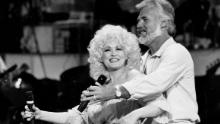
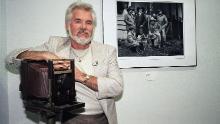
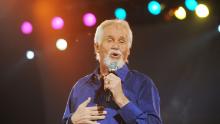
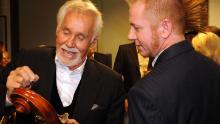
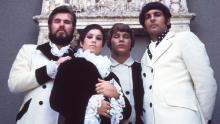
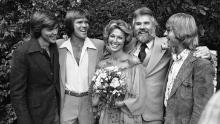
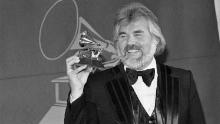
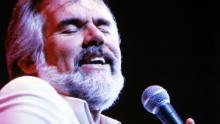
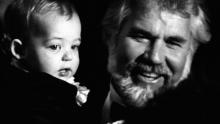
Country Singer Kenny Rogers Death March 20, 2020 · Sandy Springs, GA

Kenny Rogers, whose legendary music career spanned six decades, has died at the age of 81, his publicist Keith Hagan told CNN.

The artist's family announced his passing on Rogers saying he died Friday night from natural causes under the care of hospice and surrounded by family.


"Kenny Rogers left an indelible mark on the history of American music. His songs have endeared music lovers and touched the lives of millions around the world," a statement posted by Hagan says.
Rogers was inducted to the Country Music Hall of Fame in 2013, for what organization officials called a "distinctive, husky voice."